Key Takeaways
- Italian decorative wall panels cover the whole wall in premium hardwood, not just the lower half like standard wainscoting.
- Italian boiserie uses hand-finished veneers and cured lacquers that resist warping for generations.
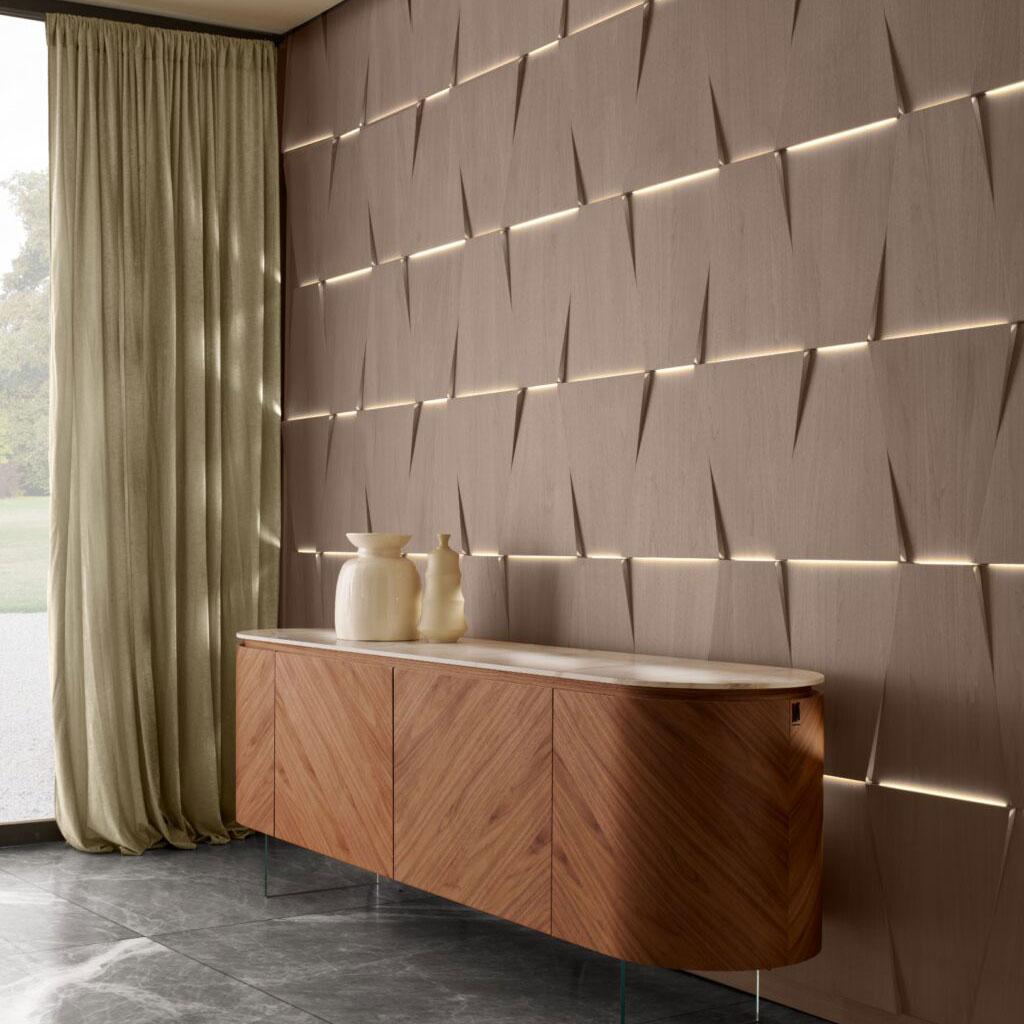
- Modern panel systems can hide doors, LED lighting, and shelving inside the wood grain.
- “100% Made in Italy” panels signal real quality to affluent clients and protect premium pricing.
Italian decorative wall panels differ from standard wainscoting in scale, material, and purpose. Wainscoting protects the lower third of a wall with budget wood. Italian panels run floor to ceiling in premium hardwood and hand-applied finishes. They turn the wall into the room’s main design feature, not just a background detail.
Standard wainscoting has been the default wall treatment in American homes for decades. But affluent clients now want more custom spaces. This shift mirrors Italian interior design, where walls act as a design element, not just a backdrop. Knowing the differences helps trade professionals set their projects apart from builder-grade trends.
What Is Standard Wainscoting?
Standard wainscoting covers the lower third or half of a wall. Builders first used it to protect plaster from moisture and daily wear, like scuffs from dining chairs. Today it shows up as beadboard, board-and-batten, or simple picture-frame molding.
Wainscoting is built for the mass market, so it relies on cheap, easy materials. Builders typically choose medium-density fiberboard (MDF), basic plywood, or soft pine. These ship easily and go up fast with standard nails and glue.
That works fine for a budget renovation. But painted MDF can’t match the depth or strength that a luxury estate needs.
What Are Italian Decorative Wall Panels?
Italian decorative wall panels are floor-to-ceiling architectural features, not just protective trim. They come from boiserie, the centuries-old European tradition of carved wood paneling. Builders once used boiserie to insulate and decorate French and Italian palaces. Modern versions blend that history with advanced milling technology.
These panels set the tone for the whole room, not just one wall. Italian makers craft everything from ornate, classic boiserie to sleek, modern wood wall panels with clean lines. The design shifts from basic trim to a bold, textured feature that draws the eye right away.
What Makes Italian Wall Panels Different From Wainscoting?
The gap between wainscoting and Italian wood boiserie shows up fastest in materials and lifespan. MDF wainscoting is built to be disposable. It absorbs moisture, warps, and chips, so it needs frequent repainting to hide the wear.
Authentic Italian wood panels aim for what the trade calls generational quality. Artisans use sustainable hardwoods and exotic veneers, like Canaletto walnut or smoked eucalyptus. They finish each panel with lacquers cured for lasting durability. Precise European milling keeps every panel stable, so it won’t warp or gap over time.
The finishing process matters just as much. Italian panels feature hand-rubbed stains, matched-grain veneers, and metallic or leather accents instead of flat paint. Some collections extend those finishes to matching pieces, like Italian mirrors with the same wood frames, so a whole room reads as one design. These panels treat walls like fine furniture. The result looks less like a building material and more like a custom furniture piece built into the wall.
How Much Design Freedom Do Italian Panels Allow?
Standard wainscoting locks a room into one look. Beadboard and raised panels read as “traditional” or “farmhouse” right away. That doesn’t fit a modern penthouse, hotel lobby, or retail space.
Italian decorative wall panels offer far more design freedom. Makers build them per project instead of cutting them to standard lumber sizes. Designers use them to create bold 3D profiles, fluted textures, and geometric layouts that catch the light in new ways. In a modern dining room, for example, fluted panels can wrap an entire accent wall and upgrade the space without adding more furniture.
These systems also fold into the architecture itself. High-end panels can hide doors, house flush LED lighting, or build in shelving without breaking the wood grain. Pair panels with a few accent decor ideas, like a sculptural console or a bold piece of art, and the wall becomes a full design statement. This clean, seamless look isn’t possible with standard trim carpentry.
Why Does “Made in Italy” Matter for B2B Projects?
For designers and builders, sourcing choices shape client trust and protect the budget. Affluent clients know real quality when they see it. Pitching a luxury concept with domestic MDF trim hurts the whole project. It risks a high-budget build looking dated before it’s even done.
Specifying “100% Made in Italy” panels gives clients an instant signal of quality. It shows the work comes from artisans with a long design history. It also protects the project from cheap imports that skip European manufacturing standards. Many firms also pair Italian panels with elegant traditional furniture, so every surface in a room speaks the same design language. For the B2B professional, that consistency justifies premium pricing and keeps clients happy with the finished result.
Where Can Designers Source Authentic Italian Wall Panels?
Moving a project from builder-grade finishes to true luxury takes a trusted sourcing partner. Michelangelo Designs is a premier source for trade professionals who need authentic, made-in-Italy wall treatments. We give designers direct access to a curated line of Italy’s top architectural brands, including Bianchini furniture, instead of generic retail options.
At our Passaic, New Jersey trade showroom, professionals can see and touch the material quality and fine finishes of authentic Italian boiserie in person. As a full luxury furniture showroom, we also offer B2B design support so every panel fits the exact specs of a commercial or residential project.
Don’t let standard wainscoting hold back your next high-end build. Choose the lasting quality of Italian decorative wall panels, and register for a Trade Account to unlock exclusive B2B pricing and custom options.
Ready to Elevate Your Next Design Project?
Get exclusive trade pricing, custom paneling options, and hands-on access to authentic Italian craftsmanship at our Passaic showroom. Book a showroom appointment.