Key Takeaways
- Mirrors are spatial architects, not just reflective surfaces — Strategically placed Italian mirrors can effectively double a room’s perceived size by reflecting sightlines, depth cues, and architectural features, fundamentally changing how a space feels to inhabit.
- Light amplification is a design tool — Placing a mirror opposite a window or light fixture doesn’t just reflect light, it distributes it — reducing the need for additional fixtures while creating more balanced, atmospheric illumination throughout the room.
- Italian craftsmanship elevates function into art — Frames crafted from hand-selected woods, marble, leather, and metal accents transform mirrors into sculptural, dimensional pieces that contribute to a room’s design language rather than simply serving a utility.
- Placement precision determines impact — Mounting at eye level (57–65 inches), reflecting meaningful sightlines, and considering how light shifts throughout the day are all critical decisions that separate a thoughtfully integrated mirror from one that simply fills wall space.
- Quality of glass matters as much as the frame — Italian mirrors use high-clarity glass that minimizes distortion, ensuring clean, accurate reflections that genuinely enhance light rather than fragmenting it — a distinction that separates them from mass-produced alternatives.
You walk into a room and immediately sense something different. The space feels larger. Light moves differently across the walls. Your eye travels to unexpected focal points.
A modern Italian mirror creates this shift.
These pieces function as more than reflective surfaces. They reshape how you experience a room through three fundamental elements: spatial perception, light manipulation, and architectural emphasis. Understanding these principles helps you make informed decisions about placement, scale, and design integration.
The Science Behind Spatial Illusion
Mirrors alter your brain’s perception of physical boundaries.
When you place a mirror on a wall, it reflects images of the room, creating the impression of extended space. This effect becomes particularly powerful when the mirror sits opposite a window, establishing a seamless connection between indoor and outdoor areas.
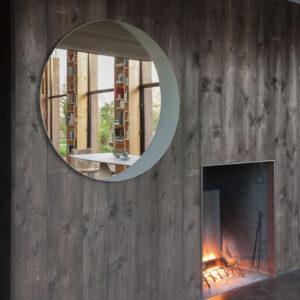
The math supports this. A large wall mirror can double a room’s perceived size by reflecting adjacent walls, furniture, and architectural features. Your eye reads the reflection as additional square footage, even though the physical dimensions remain unchanged.
The illusion works because mirrors trick your spatial reasoning. When you look at a reflection, your brain processes depth cues from the mirrored space. This creates cognitive expansion—the room feels more open because your mind registers both the physical space and its reflection as navigable territory.
Strategic Placement for Maximum Impact
You achieve the strongest spatial effect by placing mirrors where they reflect the longest sightlines in your room. A mirror positioned to capture a hallway or open doorway extends perceived depth more effectively than one reflecting a blank wall.
Consider scale in relation to surrounding elements. A mirror that spans two-thirds of a wall height creates balance without overwhelming the space. This proportion allows the reflection to enhance the room while maintaining architectural integrity.
Light Amplification and Distribution
Mirrors function as light multipliers.
When you place a mirror directly across from a window, it reflects natural light, instantly brightening the room and enhancing openness. This technique proves particularly valuable in spaces with limited natural light or northern exposures.
The reflection doesn’t just bounce light—it distributes it throughout the space. A single light source becomes multiple points of illumination as the mirror captures and redirects photons across different angles. This reduces the need for additional fixtures while creating more even lighting conditions.
Artificial light responds the same way. Position a mirror opposite a chandelier or pendant light, and you amplify the fixture’s impact. The reflection adds visual weight to the light source while spreading its glow across previously shadowed areas.
The Quality of Reflection
Not all mirrors reflect light equally.
Modern Italian mirrors use high-quality glass with minimal distortion. This precision matters because even slight imperfections in the reflective surface can fragment light rather than enhance it. The clarity of Italian glass ensures clean, accurate reflections that maximize light distribution.
The frame material also influences light behavior. Metallic finishes—whether brass, chrome, or brushed nickel—catch and reflect ambient light themselves, creating an additional layer of luminosity around the mirror’s perimeter.
Craftsmanship as Design Statement
Italian mirror makers approach their work as sculpture.
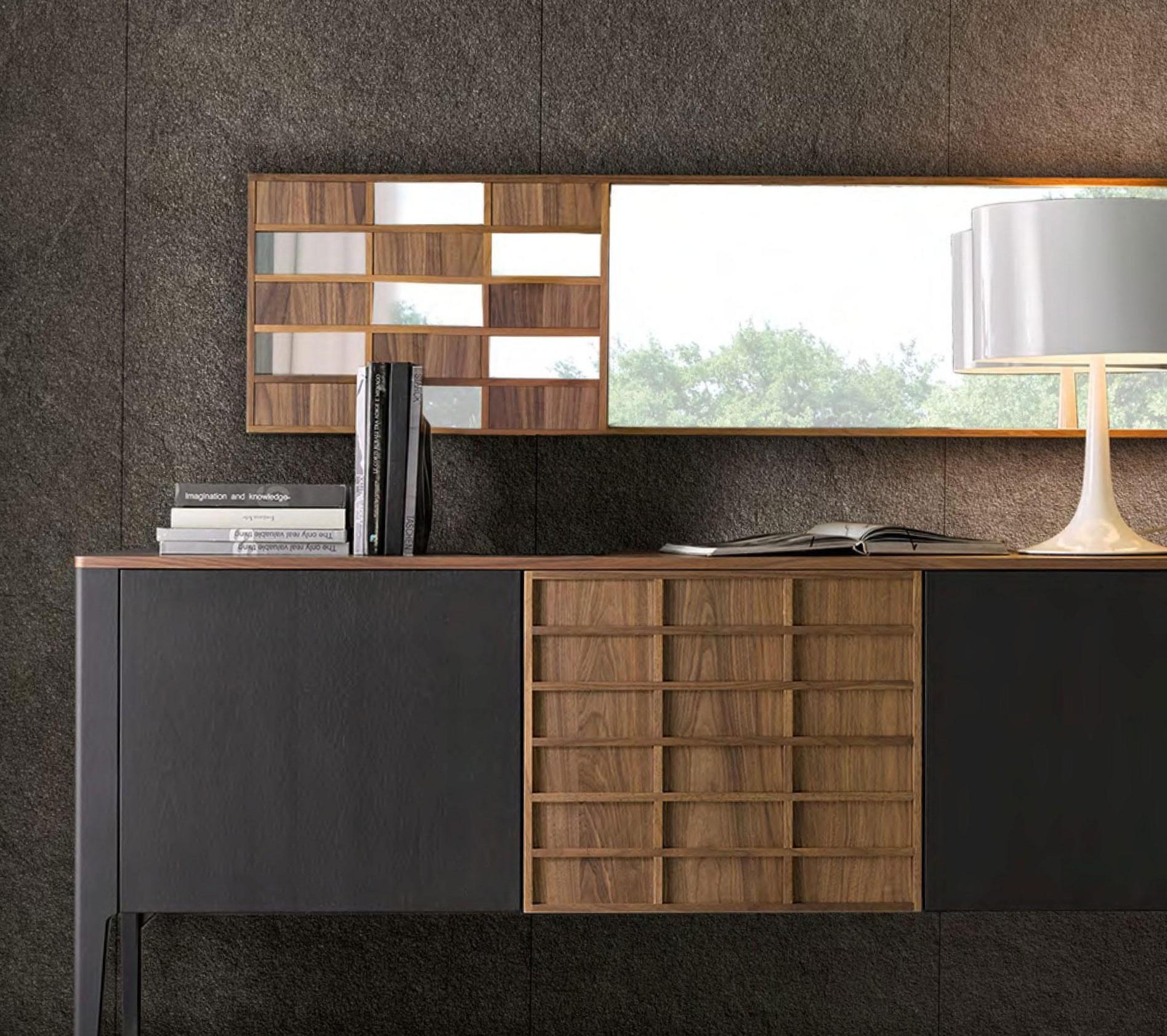
Each piece combines functional reflection with artistic expression. You find frames detailed in marble, leather, and glass—materials chosen for their textural contrast and visual weight. These mirrors exist as dimensional living works of art, not merely utilitarian objects.
The craftsmanship shows in the details. Hand-selected woods, textured leathers, and metal accents transform the frame into an architectural element. This attention to material quality and finishing technique distinguishes Italian mirrors from mass-produced alternatives.
The design philosophy emphasizes both form and function. Clean lines and minimalist frames complement modern interiors without competing for attention. The mirror enhances your existing design choices rather than demanding to become the room’s dominant feature.
Current Design Direction
The movement toward organic shapes continues to gain momentum.
You see this in the prevalence of oval and asymmetrical forms replacing traditional rectangles. Even subtle curves make a space feel more intentional and contemporary. This shift reflects broader design trends embracing natural materials and softer geometries.
Frameless designs champion sleekness and simplicity. These mirrors create a spa-like experience, particularly effective in compact spaces where they enhance the illusion of openness without adding visual bulk through frame elements.
Backlit LED integration represents another significant development. The combination of reflection and ambient lighting adds functionality while creating atmospheric depth—beauty meeting practicality in a single element.
Creating Focal Points and Architectural Emphasis
Mirrors direct attention.
When you position a mirror to reflect artwork, a stunning view, or an interesting architectural detail, you double its visual impact. The reflection draws the eye and creates a secondary focal point that reinforces the original element’s importance.
Placement at eye level—generally 57 to 65 inches from the floor—creates an intuitive focal point. This height range aligns with natural sightlines, making the mirror feel properly integrated into the room’s composition rather than arbitrarily placed.
Angled placement guides sightlines toward key design features. A mirror positioned at a slight tilt can capture and redirect attention to areas you want to emphasize, whether that’s a sculptural staircase, a textured accent wall, or a carefully curated display.
Highlighting Architectural Features
Mirrors echo and accentuate structural details.
You can use them to emphasize ceiling height by placing tall, vertical mirrors that draw the eye upward. This technique works particularly well in spaces with interesting crown molding or coffered ceilings—the reflection reinforces the architectural investment.
In rooms with beautiful windows, mirrors positioned to capture those frames create rhythm through repetition. The reflected window becomes a design element itself, adding perceived openness and reinforcing the connection to exterior views.

Integration with Your Design Vision
The most effective mirror placement serves your specific space and lifestyle.
You need to consider traffic patterns, existing furniture arrangements, and how you actually use each room. A mirror that looks stunning in a showroom might create awkward reflections or disrupt the flow in your particular layout.
Start by identifying what you want to achieve. Do you need to brighten a dark corner? Create the illusion of more space? Establish a focal point? Your goal determines optimal placement and scale.
Test positions before committing. Hold the mirror in different locations and observe how it interacts with light at various times of day. Notice what it reflects and whether those reflections enhance or detract from the room’s atmosphere.
The frame style should complement your existing design language. Modern Italian mirrors offer enough variety—from ornate gilded frames to avant-garde lucite shapes—that you can find pieces aligning with any aesthetic direction while maintaining the craftsmanship and quality that defines Italian design.
The Lasting Value of Thoughtful Selection
A well-chosen mirror becomes a permanent asset to your space.
The principles of proportion, balance, and harmony remain constant regardless of shifting trends. Italian craftsmanship honors these eternal truths, creating pieces that maintain relevance and beauty across decades.
Your investment in quality mirrors pays dividends through daily experience. The way light moves through your space, the sense of openness you feel, the visual interest created by thoughtful reflection—these elements compound over time, continuously enhancing your environment.
Modern Italian mirrors transform rooms through precise manipulation of perception, light, and focal emphasis. They demonstrate how functional objects can elevate into art when crafted with attention to material quality, design integrity, and spatial understanding.
The mirror you choose today shapes how you experience your space tomorrow and for years to come.
At Michelangelo Designs, each piece in our collection is selected with this enduring standard in mind. We invite you to explore our showroom and discover the modern Italian mirror that will define your space for decades to come.