Key Takeaways
- Modern Italian outdoor furniture sets a new standard for exterior spaces. Homeowners and interior designers commissioning high-end terraces, rooftops, and resort-style grounds now expect the same design rigor outdoors as indoors. Italian outdoor collections meet that standard with the precision and material integrity the space demands.
- Material performance is a specification-grade conversation. High-performance outdoor fabrics, thermally modified wood, and UV-resistant synthetics eliminate the traditional tradeoff between aesthetic quality and weather durability, making these pieces as defensible on a spec sheet as they are visually refined.
- Furniture placement, not architecture, defines an outdoor space. Scale, orientation, and a consistent material language across pieces create distinct areas for dining, lounging, and gathering without relying on walls or partitions. Italian modern design executes this through restraint rather than visual noise.
- Longevity is the strongest sustainability argument. Furniture that maintains structural and aesthetic integrity over a decade doesn’t generate replacement cycles, a quantifiable benefit for hospitality projects and a meaningful reframe of the initial investment for homeowners.
- Trade access unlocks customization retail cannot offer. Michelangelo Designs’ product library of 2,000-plus fabric, leather, metal, and finish options allows precise coordination with interior palettes and architectural materiality, available through a trade relationship backed by domestic inventory.
Outdoor environments in luxury residential and hospitality projects now demand the same design rigor as interior spaces. Specifying modern Italian outdoor furniture at this level isn’t aspirational, it’s the baseline expectation for homeowners and interior designers commissioning high-end terraces, rooftops, and resort-style grounds.
The shift is clear: architecture-first outdoor design has sophisticated buyers commissioning master plans that shape movement, sightlines, and distinct zones for cooking, lounging, dining, and wellness. The projects you’re specifying for require furniture that holds its own against interior architecture and landscape design — not seasonal pieces that compromise the vision.
Italian outdoor collections deliver this caliber of design with the precision, comfort, and material integrity the space demands indoors, now engineered for exterior applications.
Material Specifications Worth Putting in Writing
Buyers at this level are tracking lifecycle costs, not just initial investment. The material engineering behind modern Italian outdoor furniture supports that conversation.
High-performance outdoor fabrics now rival indoor upholstery in softness and drape, resisting fading, stains, and moisture while maintaining a refined hand feel, eliminating the tradeoff between tactile quality and weather performance that defined earlier generations of outdoor textiles. For hospitality projects, this matters across warranty periods and operational timelines, not just opening season.
Structural performance matches the surface quality. Thermally modified wood resists moisture infiltration without chemical treatment, maintaining dimensional stability across climate zones. UV-resistant synthetics hold colorfastness under prolonged exposure. Handcrafted frames built to specification-grade standards withstand unpredictable weather without compromising the aesthetic integrity of the installation.
When justifying these material choices, you’re not presenting a beauty-versus-practicality tradeoff. The specifications hold on both counts.
Italian Furniture Specification Guide for Hospitality & Commercial Design
Styling Principles for Outdoor Living Spaces
The same design logic that guides interior planning applies outdoors, and modern Italian outdoor furniture is well-suited to executing it.
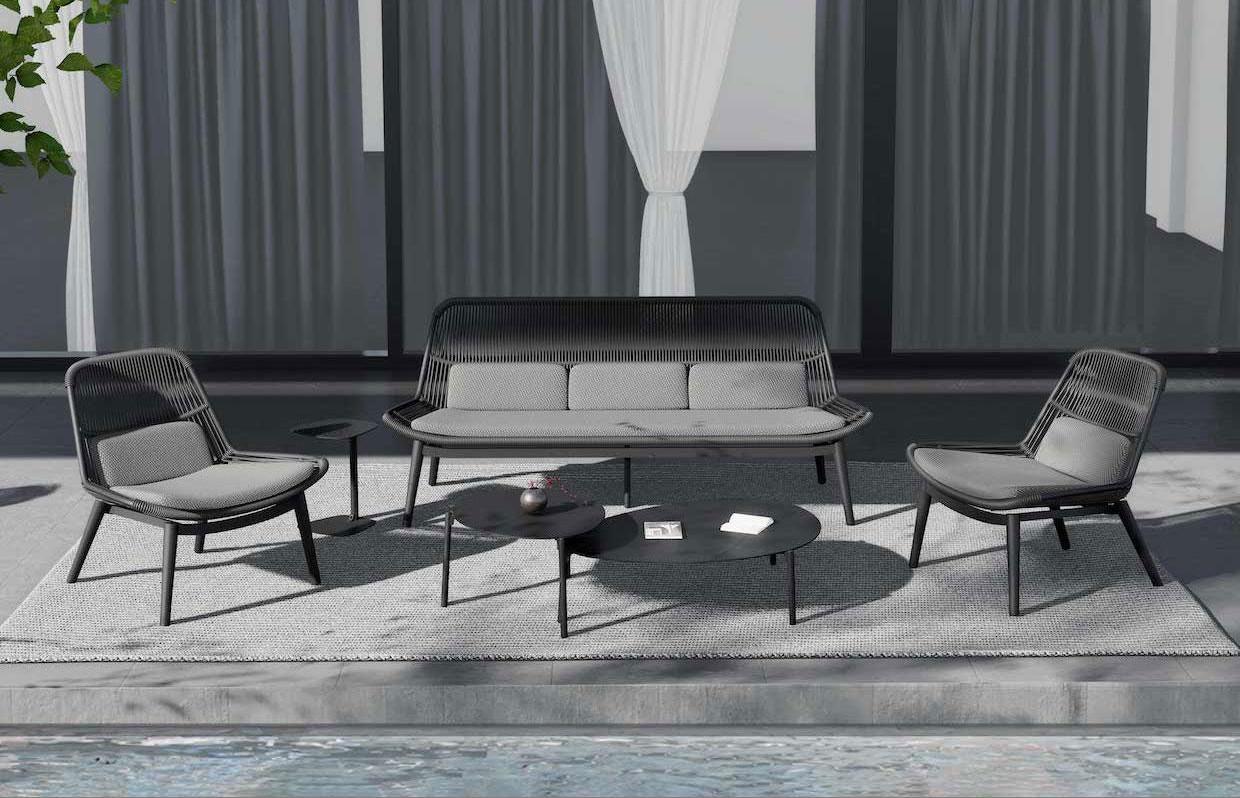
For terraces and rooftop spaces, use furniture scale and placement to define areas rather than relying on walls or partitions. A low-profile Italian lounge grouping anchored by a stone-finish coffee table signals a place to gather without enclosing it. A dining configuration built around a substantial cast aluminum or teak table creates a distinct destination within the same open space.
On larger grounds, a consistent material language across pieces, matched frame finishes and coordinated fabric families, keeps the environment feeling intentional rather than assembled. This matters whether the goal is a resort property that needs to read cohesively across its full footprint, or a private residence where the outdoor space should feel like a natural continuation of the interior.
Italian modern design handles this well because of its restraint. Precise proportions and minimal ornamentation let the pieces work with the surrounding architecture rather than against it, holding their own against stone, concrete, and glass without competing for attention.
For homeowners and interior designers working toward indoor-outdoor continuity, Michelangelo’s product library of 2,000-plus fabric, leather, metal, and finish options makes coordinating with an existing interior palette straightforward.

Longevity as a Sustainability Argument
For today’s buyers, sustainability has moved from aspiration to specification criterion. Italian craftsmanship addresses this directly, though not always in the language the conversation has defaulted to.
The most defensible sustainability argument for luxury outdoor furniture isn’t material sourcing in isolation — it’s longevity. Furniture that maintains structural and aesthetic integrity over a decade doesn’t generate replacement cycles. For hospitality projects managing procurement costs across multi-year operational timelines, that argument is quantifiable. For homeowners with high expectations for long-term investment value, it reframes the initial price point.
Sourcing Through Trade
Trade access opens collections and customization options unavailable through retail channels and for projects at this level, that distinction matters.
Michelangelo Designs has represented exclusively Italian manufacturers since 1985. The Passaic showroom functions as a working resource for interior designers and homeowners alike: 35,000 square feet of installed collections, a product library with over 2,000 fabric, leather, microfiber, metal, wood, acrylic, and lacquer options, and inventory warehoused domestically to support project timelines without extended international lead times.
The collections include outdoor seating, tables, and lounge pieces from Italian manufacturers whose work is presented annually at Milan’s Salone del Mobile — the same innovations that set global direction for exterior design, available for specification through a trade relationship that prioritizes customization and delivery reliability.
Schedule an appointment to explore outdoor collections and discuss specifications for current or upcoming projects.